Search Ideas
444 ideas match your query.:
Applied Virtues
Curiosity: The drive to find new problems and generate conjectures.
Self-Criticism: The primary tool of intellectual honesty.
Clarity: The virtue of refining thoughts to be less ambiguous and easier to criticise.
Epistemic Humility: The consistent recognition of one's own fallibility.
Thoroughness: The commitment to accounting for all known uncontroverted ideas and pending criticisms that may pertain to the problem at hand. {This seems weak}
Good Faith: The commitment to "steel-manning" ideas and criticisms.
Resilience / Fortitude: The ability to recover from failure and re-apply the process.
Decisiveness: The will to act once a conjecture is provisionally accepted and criticism is exhausted.
Self-Discipline: {This one needs work. I don't understand it well enough to write a good summary.}
Courage: The will to face the potential pains of the epistemic process (facing uncomfortable truths, acting on counter-intuitive conclusions, thinking alone).
Accountability: A social manifestation of integrity; the willingness to "own" the consequences of one's actions.
Reliability: The practice of meeting one's voluntary commitments.
Proportionality: The skill of acting proportionately to a given situation, criticism or event.
Intellectual Impartiality: The skill of separating the content of an idea from its source, allowing criticism to be applied fairly.
Fairness: The consistent application of the same critical standards to all ideas.
Intellectual Patience: The willingness to give a problem the time it needs, rather than using a problematic solution (a solution with pending criticisms). {Okay but what if it is an emergency?}
Foresight & Planning: The application of conjecture and criticism to problems pertaining to future circumstances.
Diligence / Industriousness: The sustained application of effort to the problem-solving process, usually to a particular problem.
Creativity / Ingenuity: The skill of generating novel conjectures and criticisms.
Efficiency: The drive to reduce the work, resources or steps it takes to solve problems.
Resourcefulness: The skill of solving problems within constraints.
Purposefulness: The skill of defining a hierarchy of problems to solve, ensuring one's productive effort is directed at goals worth pursuing.
Focus: The ability to sustain mental effort.
Sharpness: Raw mental processing power.
Energy / Vitality: The capacity to be highly productive, especially over long durations.
Athleticism / Physicality: The capacity of the body to execute actions.
Memory: The ability to store and retrieve important conjectures and criticisms.
Applied Virtues
Curiosity: The drive to find new problems and generate conjectures.
Self-Criticism: The primary tool of intellectual honesty.
Clarity: The virtue of refining thoughts to be less ambiguous and easier to criticise.
Epistemic Humility: The constant recognition of one's own fallibility.
Thoroughness: The commitment to accounting for all known uncontroverted ideas and pending criticisms that may pertain to the problem at hand. {This seems weak}
Good Faith: The commitment to "steel-manning" ideas and criticisms.
Resilience / Fortitude: The ability to recover from failure and re-apply the process.
Decisiveness: The will to act once a conjecture is provisionally accepted and criticism is exhausted.
Self-Discipline: {This one needs work. I don't understand it well enough to write a good summary.}
Courage: The will to face the potential pains of the epistemic process (facing uncomfortable truths, acting on counter-intuitive conclusions, thinking alone).
Accountability: A social manifestation of integrity; the willingness to "own" the consequences of one's actions.
Reliability: The practice of meeting one's voluntary commitments.
Proportionality: The skill of acting proportionately to a given situation, criticism or event.
Intellectual Impartiality: The skill of separating the content of an idea from its source, allowing criticism to be applied fairly.
Fairness: The consistent application of the same critical standards to all ideas.
Intellectual Patience: The willingness to give a problem the time it needs, rather than using a problematic solution (a solution with pending criticisms). {Okay but what if it is an emergency?}
Foresight & Planning: The application of conjecture and criticism to problems pertaining to future circumstances.
Diligence / Industriousness: The sustained application of effort to the problem-solving process, usually to a particular problem.
Creativity / Ingenuity: The skill of generating novel conjectures and criticisms.
Efficiency: The drive to reduce the work, resources or steps it takes to solve problems.
Resourcefulness: The skill of solving problems within constraints.
Purposefulness: The skill of defining a hierarchy of problems to solve, ensuring one's productive effort is directed at goals worth pursuing.
Focus: The ability to sustain mental effort.
Sharpness: Raw mental processing power.
Energy / Vitality: The capacity to be highly productive, especially over long durations.
Athleticism / Physicality: The capacity of the body to execute actions.
Memory: The ability to store and retrieve important conjectures and criticisms.
Core Moral Virtues (influenced by Ayn Rand and CR)
Rationality: The commitment to the ongoing deliberate use of conjecture and criticism.
Honesty: A refusal to evade one's thoughts, a commitment to searching for one's own errors, and a refusal to fake reality to others.
Integrity: The refusal to permit a breach between one's best ideas and one's actions.
Independence: The acceptance of one's own mind as the first and final executor of rationality within their own lives.
Justice: The application of rationality in judging ideas, people, and actions and acting on those evaluations proportionately.
Productiveness: The application of rationality to sustaining and improving one's life and circumstances.
Pride: An insatiable drive to find and fix errors in one's character, knowledge, and creations. “Moral Ambitiousness” as Ayn Rand puts it.
Please add a ‘first, previous, next, last’ navigation thing to the top of the activity feed page and similar pages. Currently I need to scroll to the bottom to go to a different page.
The Open Society
The concept of an 'Open Society' is central to the political philosophy of Critical Rationalism, detailed by Karl Popper in The Open Society and Its Enemies. An open society is characterized by individualism, where personal choice and responsibility are paramount, in contrast to a closed society (e.g., tribal or collectivist) which demands the subordination of the individual to the group. The theory replaces the justificationist political question, "Who should rule?", with the fallibilist question: "How can we structure our institutions so that we can remove bad rulers and bad policies without violence?” In this view, democracy is not "rule by the people" (an essentialist definition) but is valued as the only known institutional mechanism for changing policy and leadership without violence.
Fallibilism
This is the philosophical position that all human knowledge—every belief, theory, and observation—is conjectural, tentative, potentially incomplete, and potentially mistaken. It holds that there cannot be any conclusive justification or rational certainty for anything we might believe to be true (including observations).
Fallibilism is distinct from skepticism. Skepticism argues that because certainty is impossible, knowledge is impossible. Fallibilism agrees that certainty is impossible but denies that this invalidates knowledge. Fallibilism holds that people can and do possess real, objective knowledge, and that people can improve it through a process of error correction.
Part of creating a living space that accommodates this would be making sure I have good furniture and that it is arranged well. I believe my current furniture is not sufficient.
I'm going to do some research on this. It might pay to make a quick 3d model of the spaces I wish to improve, so that I have something semi-tangible to play with before I start spending money on furniture.
I am realising that having a good taste for where things should live is a skill. For some things it is obvious, but some things require more knowledge and consideration to place appropriately.
It might pay to make sure I have excess spots that could be “homes” for things, in case I need to make significant changes to where things live, or in case I get more things. Thankfully IKEA is opening in Auckland in a few weeks 😁.
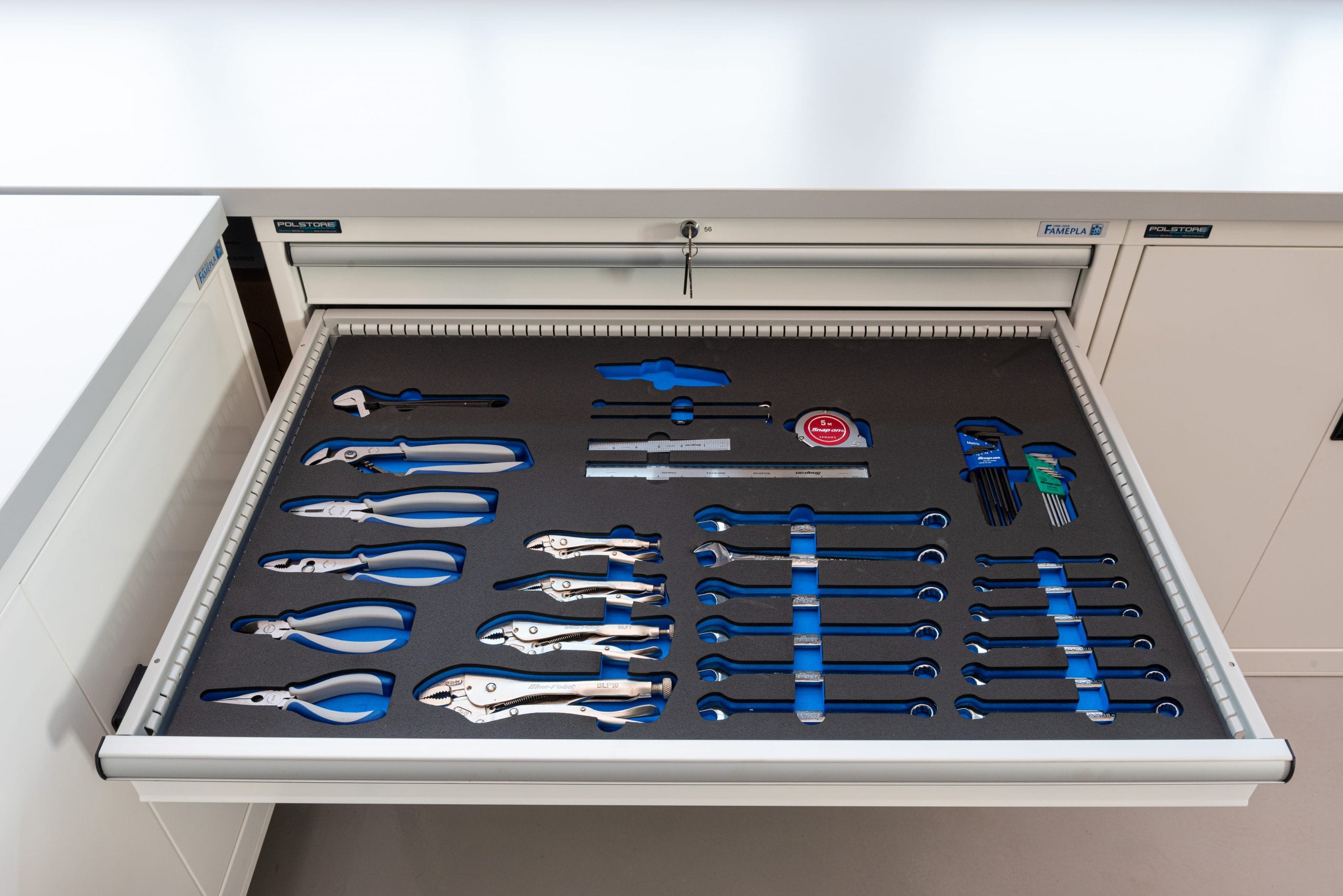
Extreme examples of solutions to this in professional contexts are shadow boards and shadow foam cutouts. Here, the users create a very clear visual correspondence between what an object is and where it belongs when not in use. I don’t expect the solution to my problem will involved drawing lines on walls or furniture, or creating foam cutouts, but there might be a hint of a solution in this.

Part of Marie Kondo’s advice is to “get rid of anything that doesn’t spark joy” (paraphrasing).
If I were to follow this advice, it might be the case that I will get rid of a lot of things that would be a waste of time and attention keeping and giving a home. I would also potentially better remember the things that I choose to keep, because I am keeping them based on a standard relating to my psychological attachment to them.
Practicing remembering the homes of everything requires that I have something external to refer to, to correct mistakes when I make them. So this doesn’t actually defeat the potential need for a list or something of the sort.
Practicing remembering the homes of everything requires that I have something external to refer to correct mistakes when I make them, so this doesn’t defeat the potential need for a list or something of the sort.
I have a poor memory relating to keeping track of what things I own, and it won’t help if I also have to remember where everything lives.
Should I write down a list of all permanent items and their homes? Ideally I wouldn’t need to do that.
I have a poor memory relating to keeping what things I actually have, and it won’t help if I also have to remember where everything lives.
Should I write down a list of all permanent items and their homes? Ideally I wouldn’t need to do that.
Just automatise it. Putting things in the right place is a fairly straightforward thing to practice, and there is no reason you couldn’t automatise the homes of all your things.
This is useful for fungible or semi-fungible items, or items that are easily categorised, but not helpful for unique items.
Grouping items by category goes a long way in reducing what needs to be remembered. I don’t need to remember where every sock goes because the simple algorithm “if sock: put in sock drawer” takes care of all socks.
I have a poor memory relating to keeping track of items, and it won’t help if I also have to remember where everything lives.
Should I write down a list of all permanent items and their homes? Ideally I wouldn’t need to do that.
Never put them anywhere else.
I believe this will be a key thing for me to automatise. Many of my things live in sort of ‘interim homes’ on the way to some not-yet-defined permanent home—which they never seem to make it to, of course.
My personal spaces are fairly bland and oddly proportioned. They are not aesthetic at all, even when maximally tidy. Aligning my living spaces with my aesthetic preferences may increase my baseline motivation to keep them tidy.
I noticed today that things in my shared spaces have better defined homes than the things in my private spaces, in the sense of #2840. ‘Relationship maintenance ‘may only be a trivial factor compared to what I describe in #2840.
I’ll test giving everything in my private spaces a dedicated home. From there it should be easier to understand how important ‘relationship maintenance’ is as a factor in my unconscious and inexplicit motivations for tidying up.
I noticed today that things in my shared spaces have better defined homes than the things in my private spaces, in the sense of #2840. Relationship maintenance may be a factor, it might be a trivial factor compared to what I describe in #2840.
I’ll test giving everything in my private spaces a dedicated home. From there it should be easier to understand how important ‘relationship maintenance’ is as a factor in my unconscious and inexplicit motivations for tidying up.
That doesn’t mean it can’t be part of the solution.
This would work well for some open threads, but not others (like anything I have left unaddressed on Veritula).