Paris · September 12, 1859

Le Verrier Reports Mercury’s Anomaly

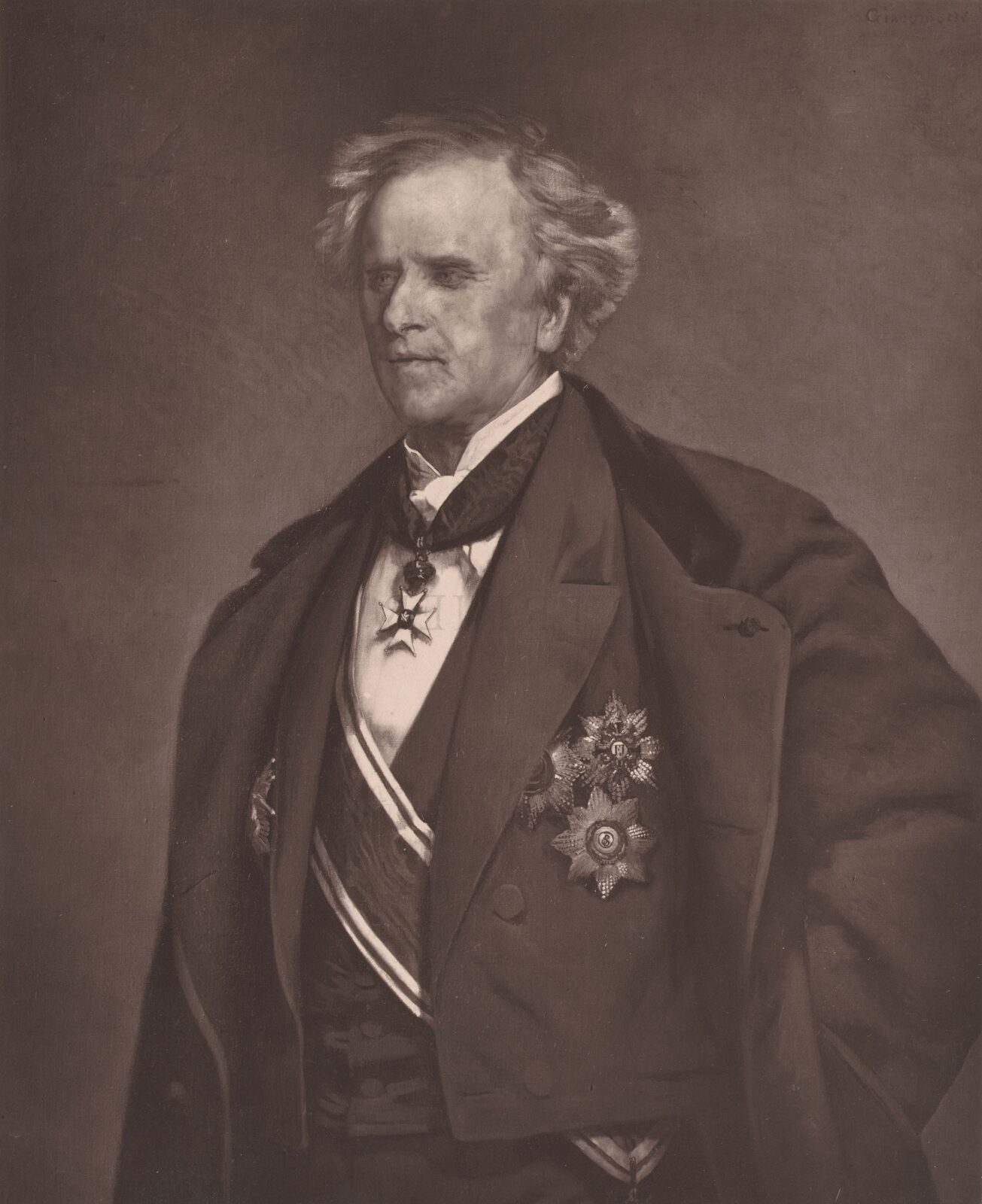
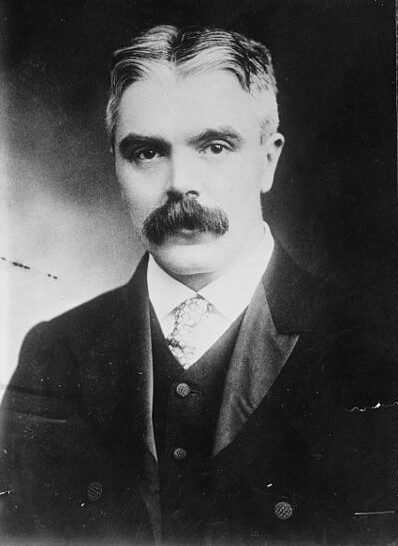
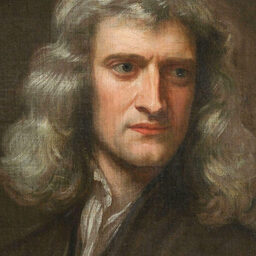
Portrait of Urbain Le Verrier
Urbain Le VerrierGoupil & Cie, about 1874 · Rijksmuseum

Mercury isn’t quite where Newton’s law says it should be. Its orbit is an oval, and the point where it comes closest to the Sun is called its perihelion. Over the centuries, that point slowly moves around the Sun. The pull of the other planets explains most of this movement, but the French astronomer Urbain Le Verrier finds that some is left over: about 38 arcseconds per century. An arcsecond is a tiny angle, 1/3,600 of a degree.

Le Verrier has seen something like this before: in 1846, the odd motion of Uranus led him to predict an unknown planet, and the German astronomer Johann Gottfried Galle found Neptune right where he said. So Le Verrier suspects unseen matter inside Mercury’s orbit: a planet, or a ring of small bodies.

Mercury traveling its orbit around the Sun while the orbit slowly turns, so that its perihelion, the point closest to the Sun, advances Sun Actual Perihelion Predicted Not to scale
Drag the slider to move through time. Mercury’s orbit slowly turns, carrying its perihelion around the Sun. Under Newton’s law, the other planets explain most of this turning, but not 38 arcseconds per century. The dashed orbit and hollow dot show where Newton’s law puts Mercury. The actual orbit runs ahead.

Criticism of #5752 by Urbain Le Verrier​·​#5753

Mercury’s perihelion moves about 38 arcseconds per century more than Newton’s law predicts from the pull of the known planets.

Counter-criticism of #5753 by Urbain Le Verrier​·​#5754

Newton’s law isn’t wrong. Unseen matter inside Mercury’s orbit, a planet or a ring of small bodies, would explain the difference. That’s how the unseen Neptune explained the odd motion of Uranus.

The state of the discussion

At this point, Newton’s law of gravity has one addressed criticism, so it’s still rationally adoptable.

Use arrow keys ← →, the Previous and Next buttons above, or the timeline below to move through the history.Swipe left or right, or use the Previous and Next buttons above or the timeline below, to move through the history.

Source: Le Verrier, “Lettre de M. Le Verrier à M. Faye sur la théorie de Mercure et sur le mouvement du périhélie de cette planète”, Comptes rendus de l’Académie des sciences 49 (1859), 379–383

Researched and written with the help of AI, from the sources named. AI can make mistakes. Veritula doesn’t claim perfect historical accuracy; the sources are there to check against.

The full discussion

How Mercury and Starlight Overthrew Newton

Dennis Hackethal started this discussion 2 days ago.

Search​·​Activity

For two centuries, Newton’s law of gravity passed every test but one: a slight drift in Mercury’s orbit. Einstein’s explanation revolutionized our view of space and time.


Discussions can branch out indefinitely. You may need to scroll sideways.
The discussion as it was on September 12, 1859. Chronicle discussions are read-only. Jump to the present
Isaac Newton’s avatar
Isaac NewtonHistorical profile​·​#5752​·​July 5, 1687​·​AI-assisted

Every object pulls on every other object. The pull grows with their masses and weakens with the square of the distance between them. This one law explains the orbits of the planets and why things fall on Earth.

Urbain Le Verrier’s avatar
Urbain Le VerrierHistorical profile​·​#5753​·​September 12, 1859​·​AI-assisted

Mercury’s perihelion moves about 38 arcseconds per century more than Newton’s law predicts from the pull of the known planets.

Criticism of #5752Criticized1
Urbain Le Verrier’s avatar
Urbain Le VerrierHistorical profile​·​#5754​·​September 12, 1859​·​AI-assisted

Newton’s law isn’t wrong. Unseen matter inside Mercury’s orbit, a planet or a ring of small bodies, would explain the difference. That’s how the unseen Neptune explained the odd motion of Uranus.

Criticism of #5753
  • Rationally adoptable.
  • Not rationally adoptable.
  • Older versions with pending criticisms.
  • Ideas are blue, criticisms red, comments small and gray.
  • Hover over ideas to expand them.
  • Click on ideas to jump to their place in the discussion.