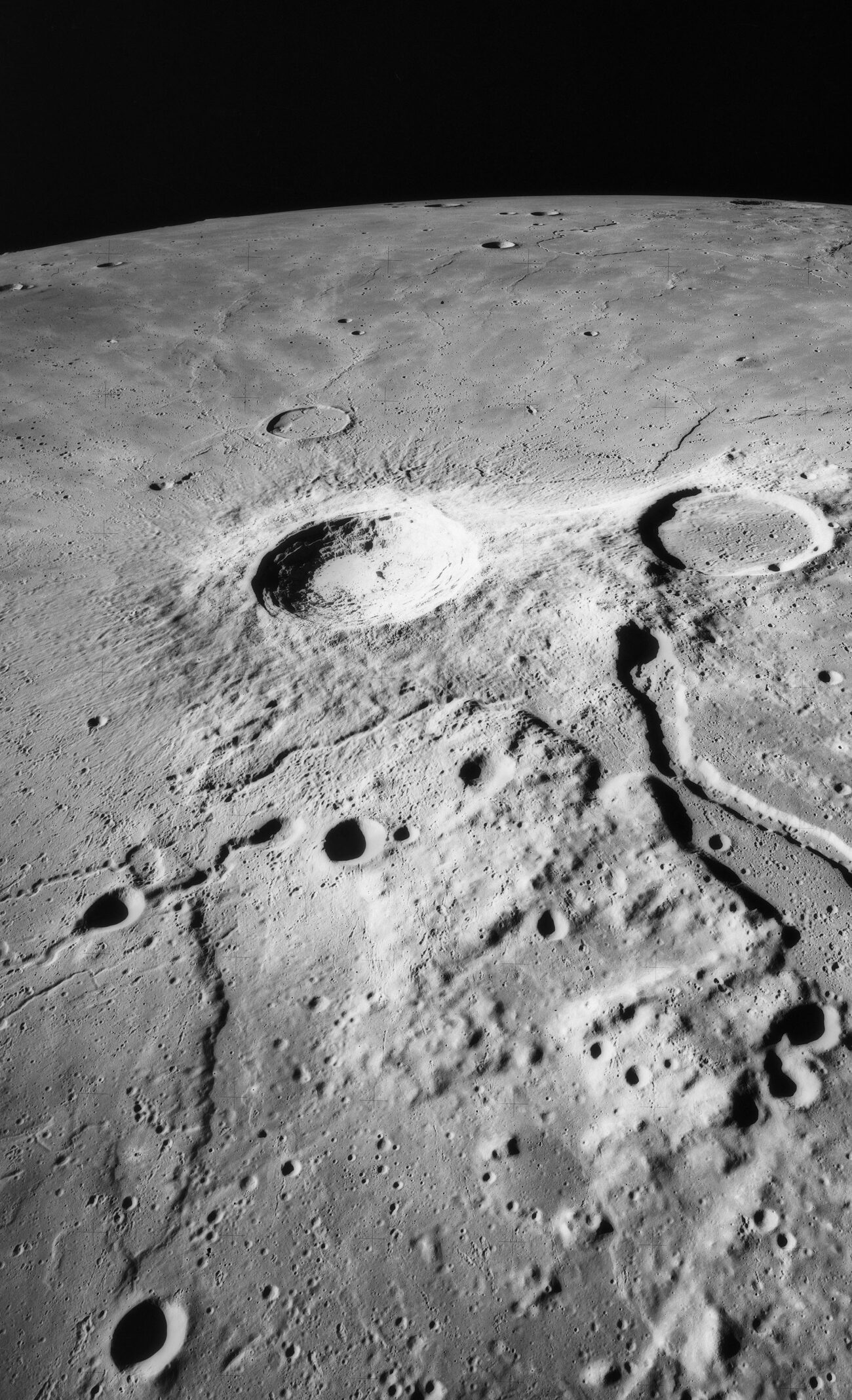
The crater named after Aristarchus, on the left, among the brightest spots on the Moon, seen from orbitNASA, Apollo 15, 1971
Eighteen centuries before Copernicus, someone sets the Earth going around the Sun. In a book that survives, the Greek astronomer and mathematician Aristarchus of Samos works out that the Sun is far larger than the Earth. In other writings, he proposes that the Sun and the stars stand still, and that the Earth circles the Sun, spinning as it goes. If so, why don’t the stars seem to shift as we move? Aristarchus has an answer: they are so far away that the Earth’s whole orbit is like a point next to their distance.
Those writings are lost. We know of them from the mathematician Archimedes, who sums them up in a book of his own, and from later writers. Hardly anyone follows Aristarchus. The Stoic philosopher Cleanthes thinks he should be charged with impiety for moving the hearth of the universe.
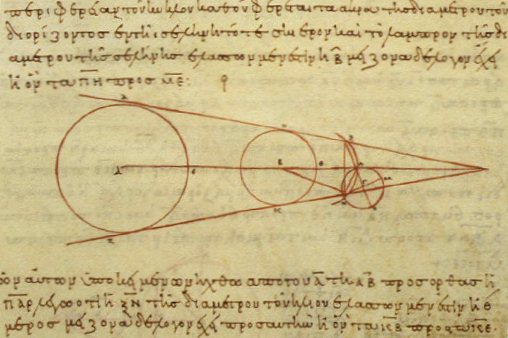
A figure from the book that survives, on the sizes and distances of the Sun and the Moon, in a 10th-century Greek copy. Vatican Library, Vat. gr. 204.
The Sun and the stars stand still. The Earth circles the Sun, which lies in the middle of its orbit, and spins as it goes.
Criticism of #5789 by Aristarchus of Samos·#5790
If the Earth circled the Sun, we would see the stars from different places over the year, so they would seem to shift back and forth. They don’t.
Counter-criticism of #5790 by Aristarchus of Samos·#5791
The stars are so far away that, next to their distance, the Earth’s orbit is like a point. Their shift is far too small to see.
The state of the discussion
Aristarchus answers the missing shift of the stars himself, so Aristarchus’s Sun-centered system has no pending criticisms. It’s rationally adoptable.
Use arrow keys ←→, the Previous and Next buttons above, or the timeline below to move through the history.Swipe left or right, or use the Previous and Next buttons above or the timeline below, to move through the history.
Sources:
Archimedes, The Sand-Reckoner (3rd century BCE)
Plutarch, On the Face in the Moon, chapter 6
Aristarchus, On the Sizes and Distances of the Sun and Moon
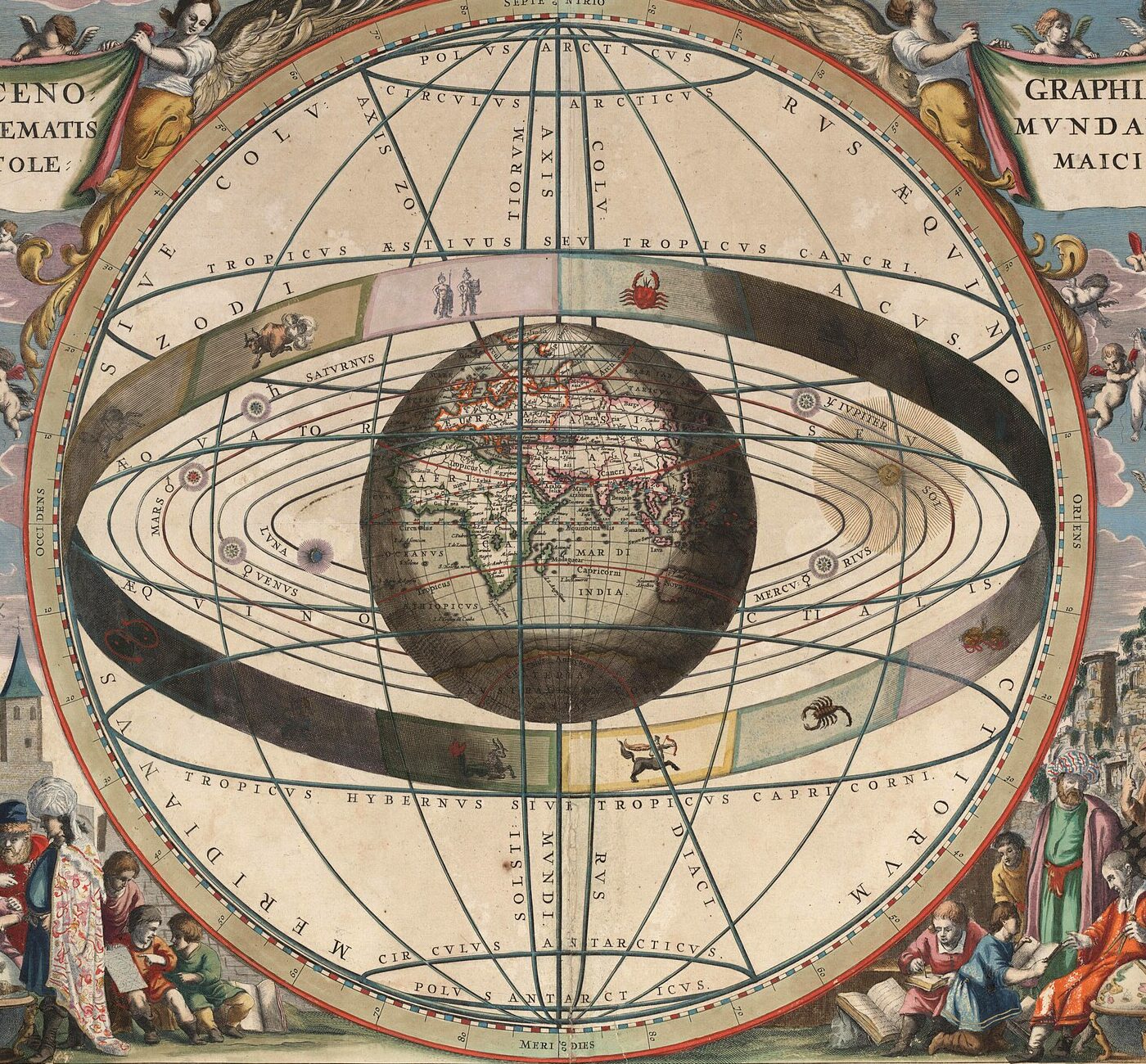
The Earth-centered universe, as drawn for Andreas Cellarius’s star atlas in 1660Andreas Cellarius, Harmonia Macrocosmica (Amsterdam, 1660)
Every day, the sky turns around us. The Sun, the Moon, and the stars rise and set as if the Earth stood still at the center of everything. The Greek astronomer and mathematician Claudius Ptolemy, working in Alexandria, writes the Almagest, which works out the motions of the Sun, the Moon, and the planets in more detail than anyone before.
His Earth sits motionless at the center. The Sun goes around it on a circle set a little off-center, and the Moon and the planets move on circles that ride on bigger circles. These smaller circles, called epicycles, explain a puzzling sight: every so often, a planet seems to stop, drift backward among the stars for weeks, and then move on. With them, Ptolemy can predict where each planet will be for years ahead. And to anyone who would set the Earth spinning, he points to the clouds and the birds.
Drag the slider to move through four years. Each planet rides on its epicycle, whose center circles the Earth. On the near side of its epicycle, a planet goes backward for a while, making a loop; the faint lines show where each planet has been. In Ptolemy’s system, unlike here, each planet keeps to its own band of distances, and the larger circles are off-center.
Every so often, a planet seems to stop, drift backward among the stars for weeks, and then move on. A planet that simply circled the Earth would never do that.
Counter-criticism of #5793 by Claudius Ptolemy·#5794
Each planet rides on a small circle, an epicycle, whose center travels along a larger one around the Earth. On the near side of its epicycle, the planet moves against the larger circle’s motion, so it seems to drift backward.
If the Earth spun once a day from west to east, it would outrun everything not standing on it. Clouds, birds, and anything thrown would always seem to drift westward, and we would never see them move east.
Counter-criticism of #5795 by Claudius Ptolemy·#5796
The air might turn with the Earth and carry the clouds and the birds along, so they wouldn’t be left behind.
Counter-criticism of #5796 by Claudius Ptolemy·#5797
If the air carried them along, they would never seem to move at all. But we see them move in every direction.
The state of the discussion
At this point, Aristarchus’s Sun-centered system has one pending criticism, so it isn’t rationally adoptable anymore. Ptolemy’s Earth-centered system has none, so it’s rationally adoptable.
Use arrow keys ←→, the Previous and Next buttons above, or the timeline below to move through the history.Swipe left or right, or use the Previous and Next buttons above or the timeline below, to move through the history.
Source: Ptolemy, Almagest (Alexandria, about 150 CE), book I, chapters 5–7
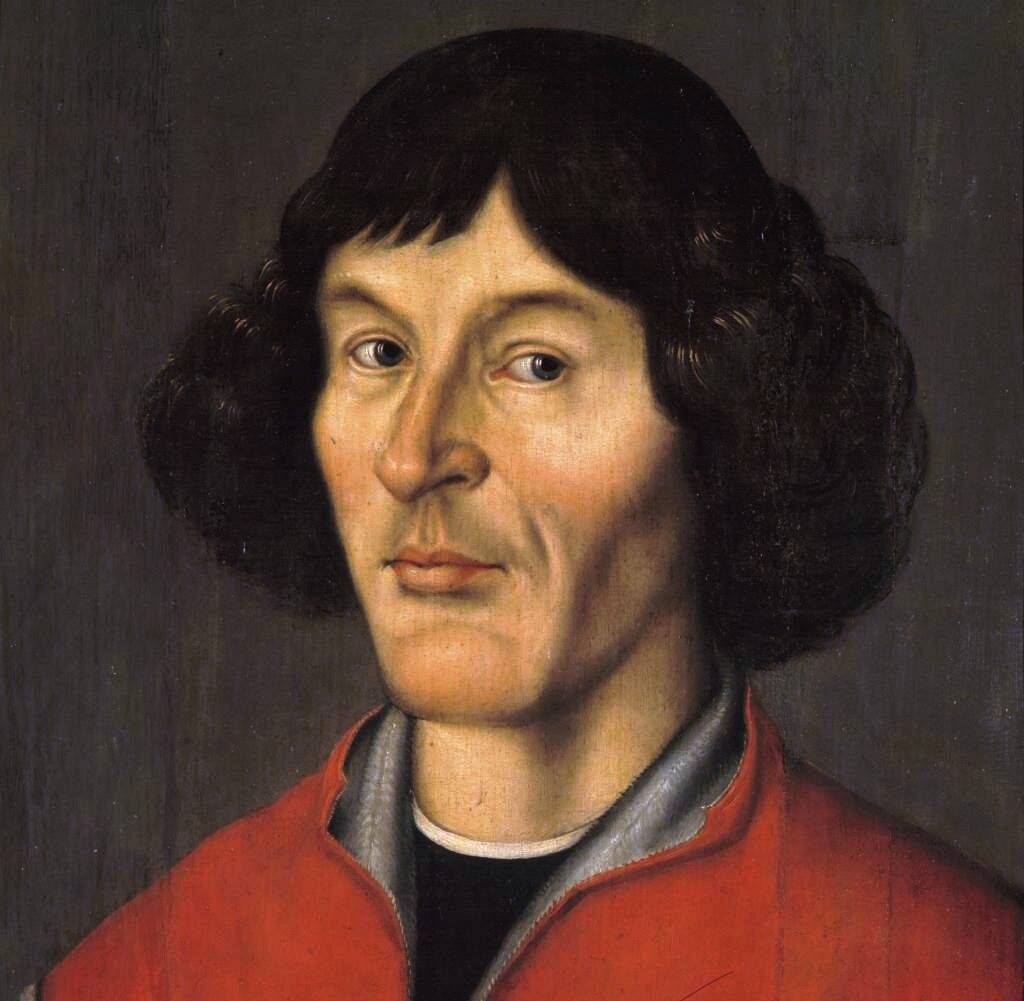
Nicolaus CopernicusUnknown painter, about 1580 · Toruń
What if the sky isn’t turning at all, but we are? The Polish astronomer Nicolaus Copernicus publishes On the Revolutions of the Heavenly Spheres. A friend later writes that Copernicus saw the finished book only on the day he died.
In his system, the Sun stands near the center, and the Earth is just another planet: it spins once a day and circles the Sun once a year. Things Ptolemy had to set by hand now follow on their own. Mercury and Venus never stray far from the Sun because their orbits lie inside ours. And Mars seems to loop backward whenever the faster Earth overtakes it.
But Copernicus still needs small circles on his circles, and his predictions are hardly better than Ptolemy’s. One question troubles his readers: if the Earth moves, why don’t the stars seem to shift over the year? They are too far away, Copernicus answers, for the shift to be seen.
Drag the slider to move through time. The Earth, on the inside track, moves faster than Mars and overtakes it. Seen from the Earth against the faraway stars, Mars then seems to stop, move backward for a while, and go on.
The Earth is a planet. It spins once a day and circles the Sun once a year, as the other planets do, with the Sun near the center of it all.
Counter-criticism of #5797 by Nicolaus Copernicus·#5800
The air near the Earth turns with it and carries the clouds along, and whatever rises or falls through the air turns with the Earth too, on top of its own motion. So we see them move every which way, as they would on a motionless Earth.
Ptolemy’s system has to set by hand that Mercury and Venus never stray far from the Sun, and that the outer planets loop backward just when they’re opposite the Sun in the sky. It never explains why. If the Earth and the planets all circle the Sun, both follow.
The state of the discussion
Copernicus answers Ptolemy’s clouds and birds, and revises Aristarchus’s Sun-centered system. The new version, Copernicus’s Sun-centered system, has no pending criticisms, so it’s rationally adoptable. Ptolemy’s Earth-centered system now has one, so it isn’t anymore.
Use arrow keys ←→, the Previous and Next buttons above, or the timeline below to move through the history.Swipe left or right, or use the Previous and Next buttons above or the timeline below, to move through the history.
Sources:
Copernicus, De revolutionibus orbium coelestium (Nuremberg, 1543), book I, chapters 8–10
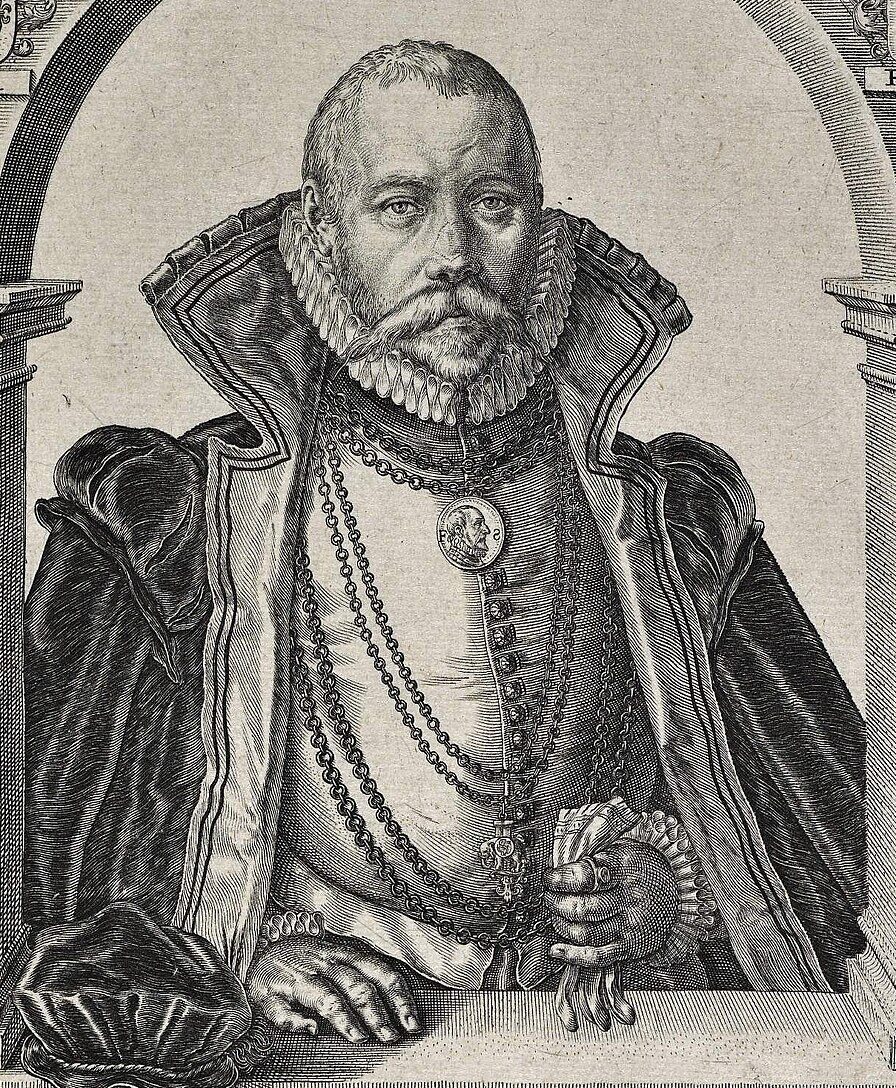
The sharpest eyes of the age can’t find the Earth’s motion. The Danish astronomer Tycho Brahe measures the sky from his observatory on the island of Hven, with instruments more precise than any before, good to about a minute of arc, a 60th of a degree. If the Earth circled the Sun, the stars should seem to shift a little over the year, as we see them from different sides of our orbit. Tycho sees no such shift.
So he builds a system of his own and publishes it in 1588: the planets circle the Sun, but the Sun, carrying them along, circles a motionless Earth. It explains everything Copernicus’s system does, without moving the Earth. In a letter the next year to the German astronomer Christoph Rothmann, a follower of Copernicus, Tycho spells out why a moving Earth makes no sense to him.
Drag the slider to move through two years. The Earth stands still. The Sun circles it once a year and carries the planets along, each circling the Sun. Mars’s circle crosses the Sun’s path, which Tycho saw as no absurdity: the comet of 1577 had shown him that no solid spheres carry the planets.
The Earth stands still at the center. The Moon and the Sun circle it, and the other planets circle the Sun. This explains everything Copernicus’s system does without moving the Earth.
Even my instruments, precise to a minute of arc, show no shift of the stars. So they would have to be at least 700 times farther from the Sun than Saturn is, leaving an absurd empty gap in between.
If the Earth spun from west to east, a cannonball fired eastward would fly a different distance than one fired westward with the same force. I’m sure both would fly equally far, so the Earth doesn’t spin.
The state of the discussion
At this point, Copernicus’s Sun-centered system has two pending criticisms, so it isn’t rationally adoptable anymore. Tycho revises Ptolemy’s Earth-centered system, and the new version, Tycho’s system, has none, so it’s rationally adoptable.
Use arrow keys ←→, the Previous and Next buttons above, or the timeline below to move through the history.Swipe left or right, or use the Previous and Next buttons above or the timeline below, to move through the history.
Sources:
Tycho Brahe, De mundi aetherei recentioribus phaenomenis (Uraniborg, 1588), chapter 8
Tycho Brahe to Christoph Rothmann, November 24, 1589, in Epistolae astronomicae (Uraniborg, 1596)
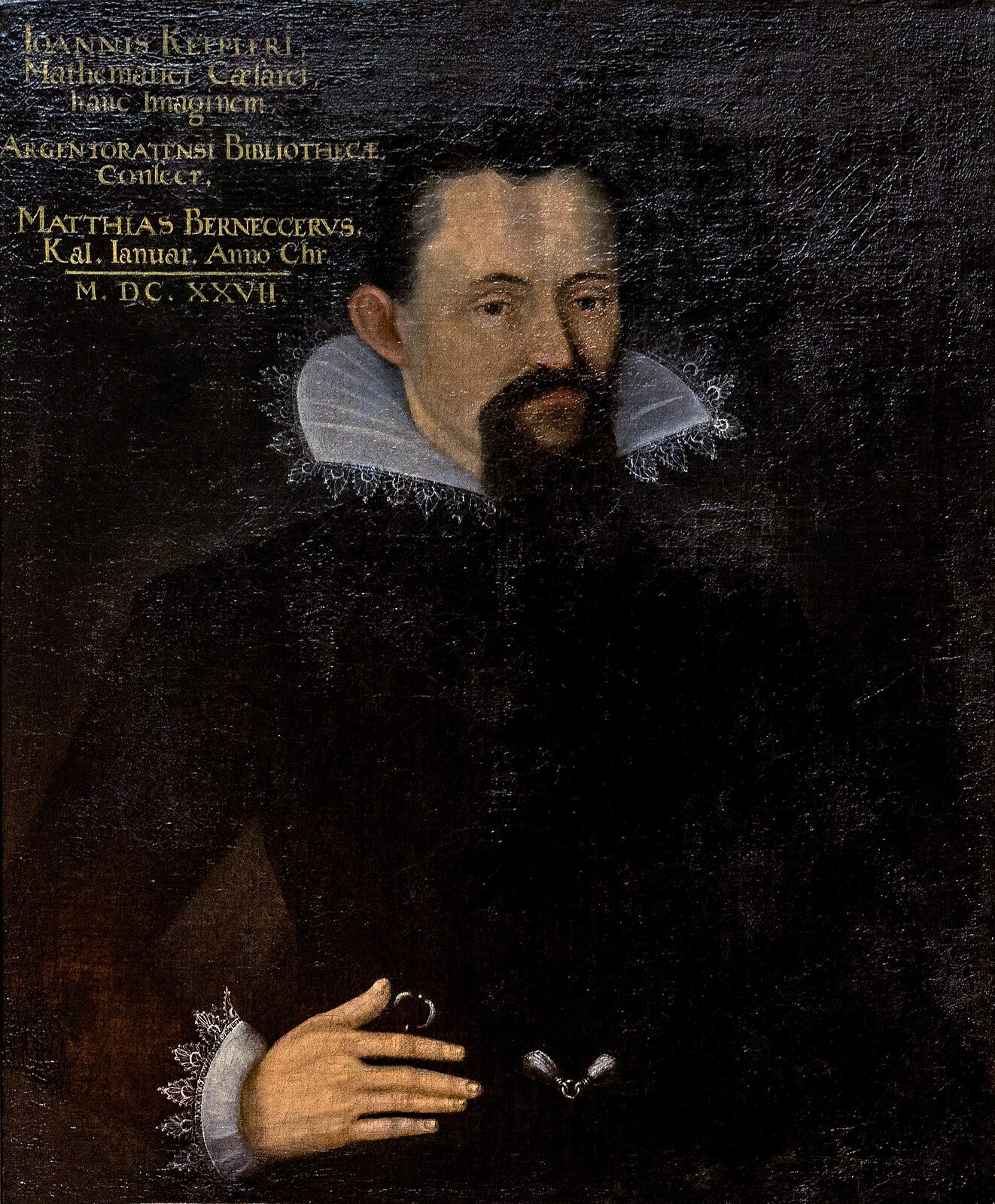
A tiny mismatch changes astronomy. The German astronomer and mathematician Johannes Kepler, who worked with Tycho in Prague until Tycho’s death in 1601, inherits his measurements of Mars. For years he tries to fit them with circles, as every astronomer before him had. His best attempt still misses some of them by eight minutes of arc, about a quarter of the Moon’s width. Others might have blamed the measurements, but Tycho’s were too good for that.
These eight minutes alone, Kepler writes in his Astronomia nova, have shown the way to reform all of astronomy. Mars moves not on a circle but on an ellipse, a stretched circle, with the Sun off-center at one of the ellipse’s two foci, and it moves faster when it’s closer to the Sun.
Years later, Kepler’s tables, built on ellipses, foretell that Mercury will pass across the face of the Sun on November 7, 1631. In Paris, the French philosopher and astronomer Pierre Gassendi watches it happen.
Drag the slider to move through one of Mars’s years. Mars moves faster near the Sun and slower far from it, so the line from the Sun to Mars sweeps out equal areas in equal times: the two pale areas take it the same time. The dashed circle is for comparison. The ellipse is stretched; Mars’s real one is nearly round.
No arrangement of circles fits Tycho’s measurements of Mars. My best one still misses some of them by eight minutes of arc, far more than Tycho’s errors.
The Earth is a planet. It spins once a day and goes around the Sun once a year, as the other planets do. Mars moves on an ellipse, a stretched circle, with the Sun at one of the ellipse’s two foci, so that the line from the Sun to the planet sweeps out equal areas in equal times, and the other planets, I expect, move the same way.
The state of the discussion
Kepler’s eight minutes tell against every system built of circles, so Tycho’s system isn’t rationally adoptable anymore. Kepler revises Copernicus’s, and Kepler’s Sun-centered system escapes them, but it still has the two pending criticisms Tycho left Copernicus’s. For now, no system of the world is rationally adoptable.
Use arrow keys ←→, the Previous and Next buttons above, or the timeline below to move through the history.Swipe left or right, or use the Previous and Next buttons above or the timeline below, to move through the history.
Sources:
Kepler, Astronomia nova (Heidelberg, 1609), chapter 19 and part IV
Kepler, Tabulae Rudolphinae (Ulm, 1627)
Gassendi, Mercurius in sole visus, et Venus invisa (Paris, 1632)
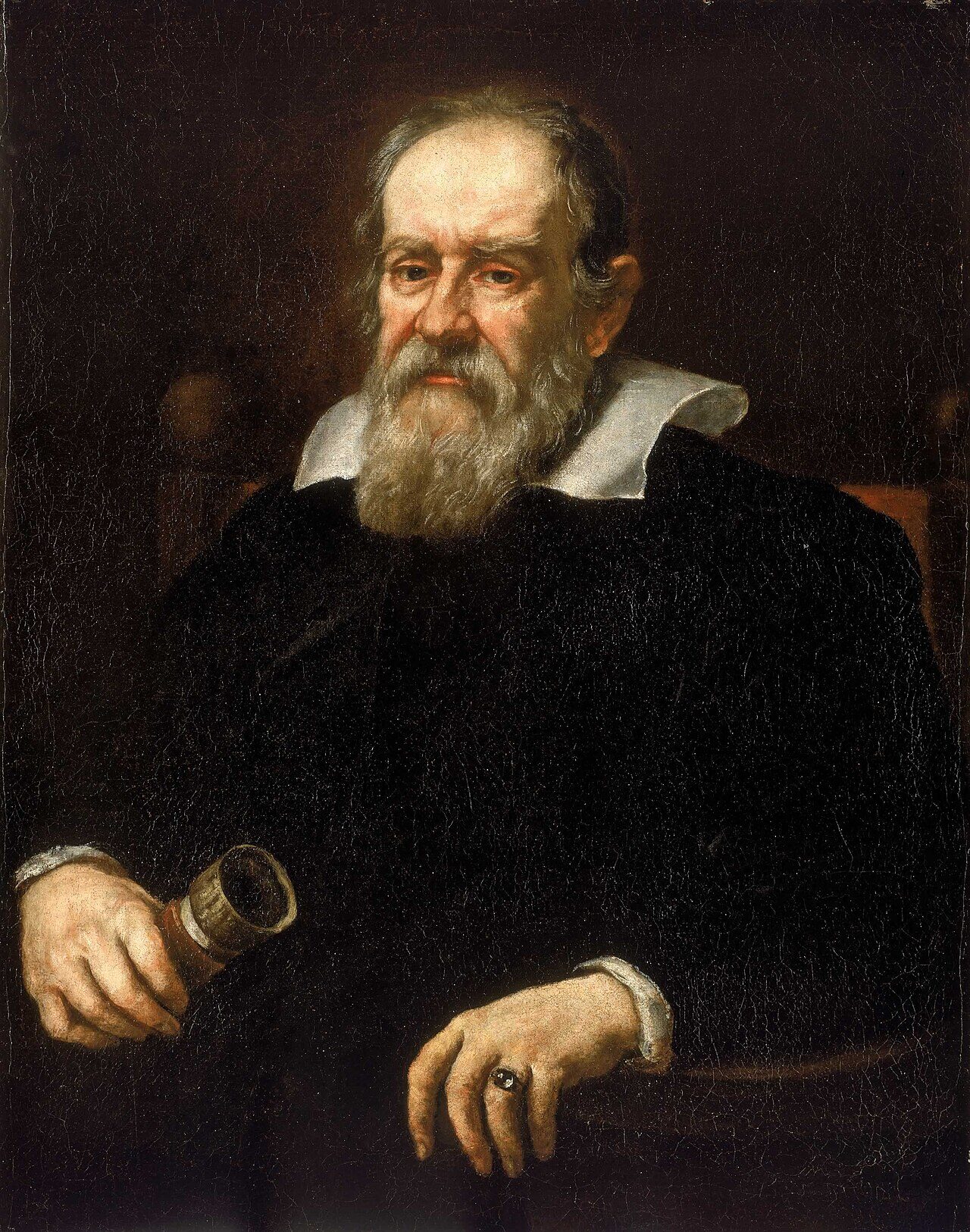
Galileo GalileiPainting by Justus Sustermans, 1636
A new instrument settles an old question. The Italian astronomer and physicist Galileo Galilei turns a telescope to the sky. In January, in Padua, Italy, he finds four moons circling Jupiter: the Earth isn’t the only center that things go around.
Then, watching Venus through the fall, he sees it change shape like the Moon. At first it’s small and nearly round, then it grows larger and half-lit, and he expects it to become a large, thin crescent, which it soon does. On December 11 he hides the discovery in a Latin anagram, to claim it without yet giving it away. Unscrambled, it reads: “The mother of loves imitates the shapes of Cynthia,” that is, Venus imitates the Moon.
In Ptolemy’s arrangement, Venus always stays between the Earth and the Sun, so we could only ever see it as a crescent. Tycho’s system passes the test, though: there, as in Copernicus’s, Venus circles the Sun.
Drag the slider to move through time. On the left, Venus rides an epicycle whose empty center, like the Sun, circles the Earth along the dashed arcs; the drawing keeps the Sun above the Earth, so both seem to stay put. On the right, Venus circles the Sun. Below, how Venus looks from the Earth: only the right shows the phases Galileo saw.
Venus shows phases like the Moon’s, from nearly full to a thin crescent, and looks largest when it’s a crescent. In Ptolemy’s system, Venus always stays between the Earth and the Sun, so it could only ever show us a crescent.
Jupiter carries four moons around with it as it moves. So a moving Earth can keep its Moon, too.
The state of the discussion
Galileo’s phases tell against Ptolemy’s Earth-centered system, which Tycho’s replaced. Tycho’s system passes the test, but still has Kepler’s eight minutes against it, and Kepler’s Sun-centered system still has two. No system of the world is rationally adoptable.
Use arrow keys ←→, the Previous and Next buttons above, or the timeline below to move through the history.Swipe left or right, or use the Previous and Next buttons above or the timeline below, to move through the history.
Sources:
Galileo, Sidereus nuncius (Venice, 1610)
Galileo to Giuliano de’ Medici, December 11, 1610, and January 1, 1611
Galileo, Istoria e dimostrazioni intorno alle macchie solari (Rome, 1613)
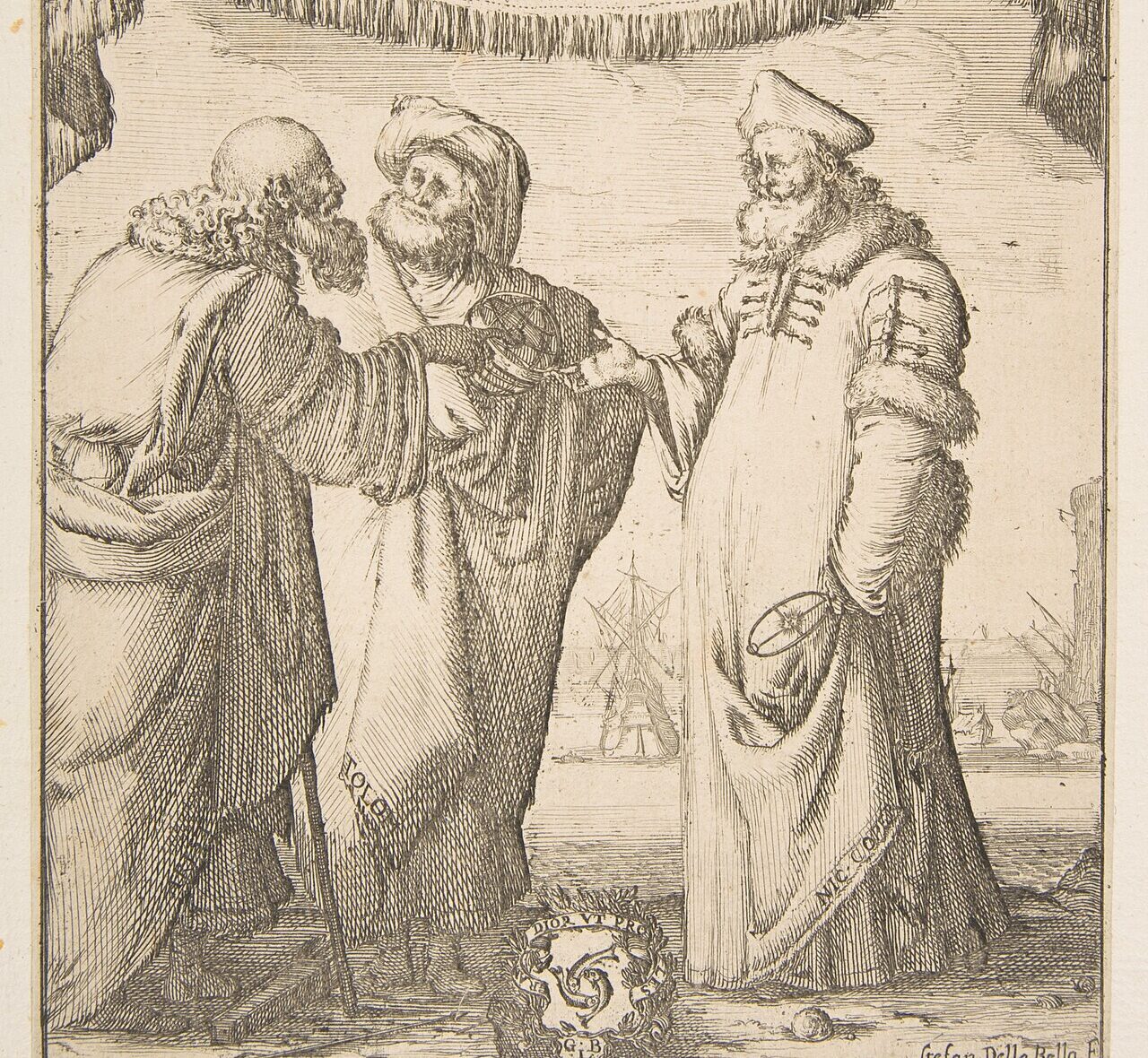
Aristotle, Ptolemy, and Copernicus in conversation, on the frontispiece of Galileo’s DialogueEngraving by Stefano della Bella, 1632 · The Metropolitan Museum of Art
If the Earth moves, why don’t we feel it? Galileo answers with a ship, in his Dialogue Concerning the Two Chief World Systems. Shut yourself below deck on a ship sailing smoothly, he writes, with butterflies, a bowl of fish, and water dripping from a bottle. They all behave just as they would in port: nothing shows that the ship is moving. A stone dropped from the top of the mast lands at its foot, not behind it, because it keeps the ship’s motion as it falls. Cannonballs on a moving Earth do the same, so they fly as far to the east as to the west.
Galileo reasons this out rather than trying it. Gassendi tries it in 1640, on a galley in the harbor of Marseille, and the stone lands at the foot of the mast. The book costs Galileo dearly: in 1633, the Roman Inquisition condemns him, and he spends the rest of his life under house arrest.
Counter-criticism of #5804 by Galileo Galilei·#5811
Everything on the Earth shares its motion, just as everything on a smoothly sailing ship shares the ship’s. A stone dropped from the top of the mast lands at its foot, and a cannonball keeps the Earth’s motion too, so it flies as far to the east as to the west. Equal distances show nothing about whether the Earth spins.
The state of the discussion
Galileo answers Tycho’s cannonball, so Kepler’s Sun-centered system is down to one pending criticism: the missing shift of the stars. Tycho’s system still has Kepler’s eight minutes against it.
Use arrow keys ←→, the Previous and Next buttons above, or the timeline below to move through the history.Swipe left or right, or use the Previous and Next buttons above or the timeline below, to move through the history.
Sources:
Galileo, Dialogo sopra i due massimi sistemi del mondo (Florence, 1632), second day
Gassendi, De motu impresso a motore translato (Paris, 1642)
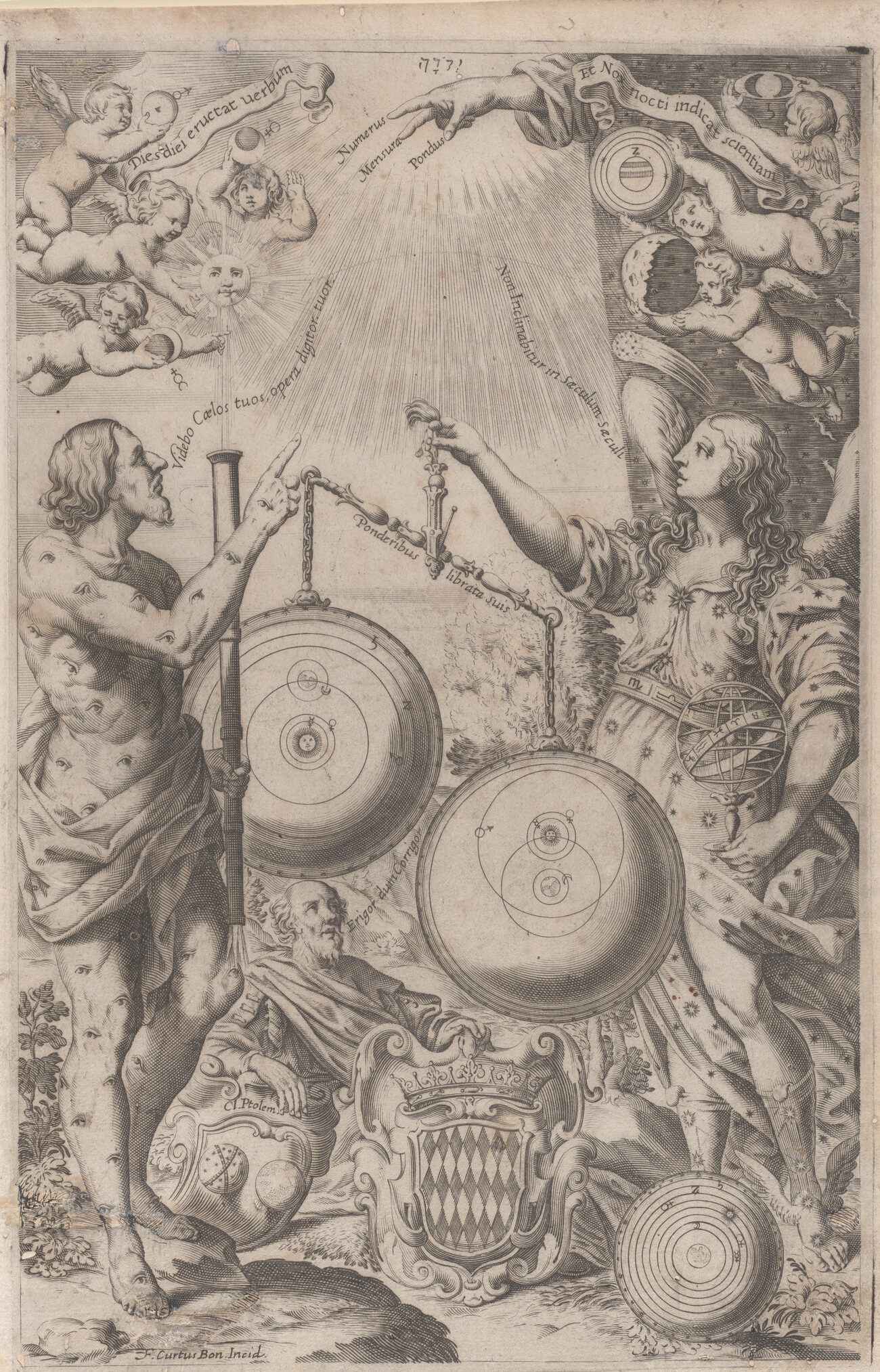
The goddess of astronomy weighs Copernicus’s system against Riccioli’s and finds his heavier, with Ptolemy’s cast aside, on the frontispiece of the New AlmagestEngraving by Francesco Curti, 1651 · The Metropolitan Museum of Art
For and against a moving Earth, the arguments have piled up for a century. The Italian Jesuit astronomer Giovanni Battista Riccioli gathers them in his New Almagest, a vast survey of astronomy: 126 in all, 49 for a moving Earth and 77 against. Weighing them, he concludes that the Earth stands still. But he doesn’t keep Tycho’s circles. Impressed by Kepler’s ellipses, he works them into a system much like Tycho’s: the Moon, the Sun, Jupiter, and Saturn roughly circle the Earth, and Mercury, Venus, and Mars go around the Sun on ellipses.
His book also brings a new map of the Moon, drawn by his fellow Jesuit, the physicist Francesco Maria Grimaldi, with names still used today. Riccioli gives craters to astronomers on both sides, Copernicus, Kepler, and Aristarchus among them, and gives Grimaldi and himself craters side by side.
Drag the slider to move through two years. The Earth stands still. The Sun, Jupiter, and Saturn circle it, and the Sun carries Mercury, Venus, and Mars along, each on Kepler’s ellipse around it. Riccioli moved Jupiter and Saturn in more involved ways than the plain circles shown here.
The Earth stands still at the center. The Moon, the Sun, Jupiter, and Saturn roughly circle it, and Mercury, Venus, and Mars go around the Sun on Kepler’s ellipses, so they fit Tycho’s measurements.
The state of the discussion
Riccioli revises Tycho’s system, and Riccioli’s system escapes Kepler’s eight minutes. With no pending criticisms, it’s rationally adoptable. Kepler’s Sun-centered system still has one: the missing shift of the stars.
Use arrow keys ←→, the Previous and Next buttons above, or the timeline below to move through the history.Swipe left or right, or use the Previous and Next buttons above or the timeline below, to move through the history.
Sources:
Riccioli, Almagestum novum (Bologna, 1651), part II, book 9, section 4
Flavia Marcacci and Paolo Bussotti, “How to use Kepler’s first and second laws in a geo-heliocentric system? Ask G.B. Riccioli”, Archive for History of Exact Sciences (2024)
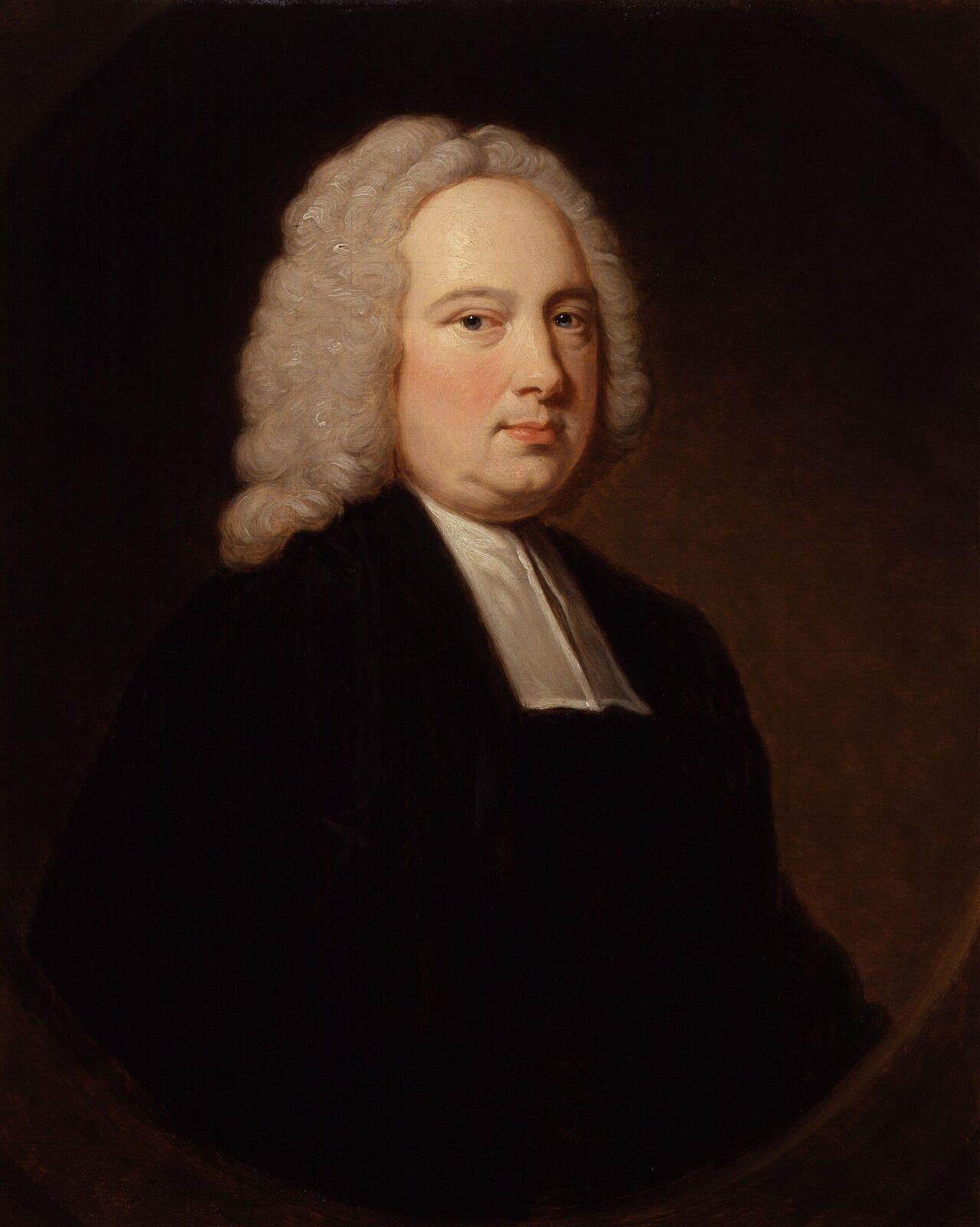
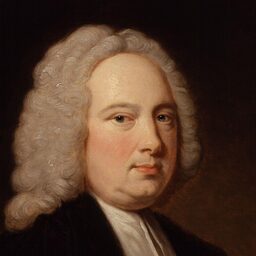
Hunting for one shift of the stars, an astronomer finds a different one. The English astronomer James Bradley wants to find the shift that Tycho couldn’t, known as parallax: as the Earth moves from one side of its orbit to the other, a nearby star should seem to move against the stars behind it. He measures the star Gamma Draconis with a telescope pointed straight up.
The star does move back and forth over the year, by about 20 seconds of arc either way, but its extremes come three months off from where the Earth’s position would put them. They follow the direction the Earth is moving in instead. So it’s a different shift, known today as the aberration of starlight, caused not by where the Earth is but by which way it’s going: light takes time to reach us, and because the Earth moves, it seems to come in at a slight slant, as rain does when you run through it.
Bradley finds the same aberration in other stars, and works out that light takes 8 minutes 12 seconds to come from the Sun, close to today’s 8 minutes 19 seconds. Of parallax, he finds no sign: it must be smaller than a second of arc. So Tycho’s objection stands.
Drag the slider to move through the year. The star is straight above the telescope on the right. Because the Earth carries the telescope along while the light travels down it, the light seems to come in at a slant, so the star seems shifted toward the way the Earth is moving, to where the outline is, and the telescope has to lean that way too, first one way, then the other.
Gamma Draconis, and the other stars I’ve measured, shift back and forth over the year by about 20 seconds of arc, always toward the direction the Earth is moving in at the time. Light takes time to arrive, and the Earth’s motion slants the direction it seems to come from. A motionless Earth can’t produce this.
The state of the discussion
Riccioli’s system now has a pending criticism too, so it isn’t rationally adoptable anymore. Neither is Kepler’s Sun-centered system: Bradley finds aberration, not the parallax Tycho found missing, so Tycho’s criticism is still pending. Once more, no system of the world is rationally adoptable.
Use arrow keys ←→, the Previous and Next buttons above, or the timeline below to move through the history.Swipe left or right, or use the Previous and Next buttons above or the timeline below, to move through the history.
Source: Bradley, “A Letter … giving an Account of a new discovered Motion of the Fix’d Stars”, Philosophical Transactions 35 (1727–28), 637–661
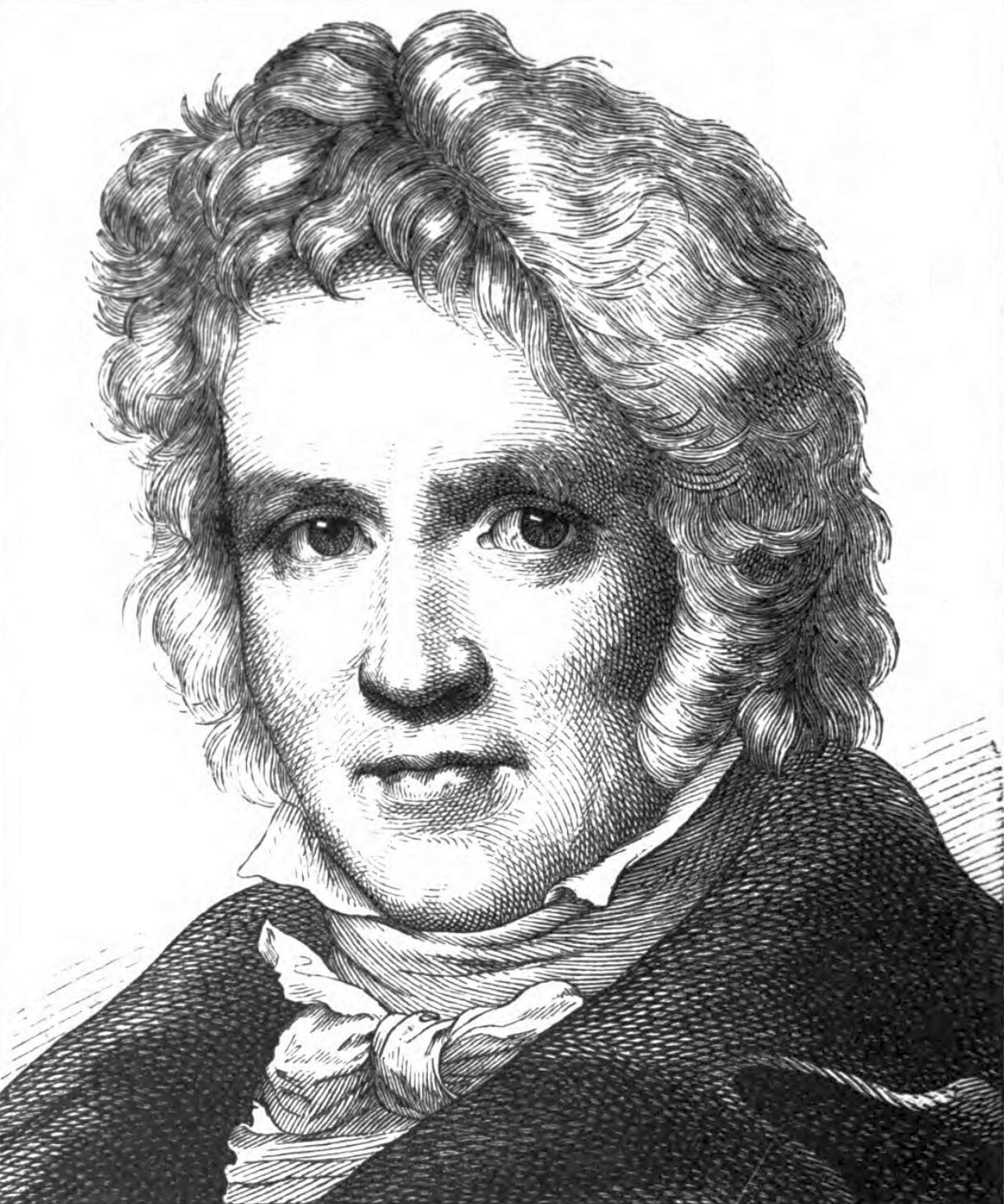
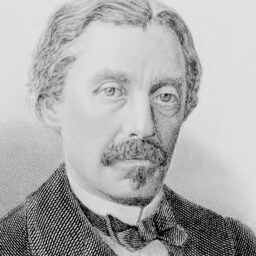
Friedrich Wilhelm BesselLithograph by Emil Eugen Sachse, 1857
After nearly three centuries, parallax turns up. The German astronomer and mathematician Friedrich Wilhelm Bessel picks 61 Cygni, a faint star that creeps across the sky faster than almost any other, a hint that it’s near. With a heliometer, a telescope whose lens is cut in half so that the halves can slide past each other to measure small angles, he compares its position with two fainter stars nearby, for over a year.
61 Cygni shifts back and forth with the seasons by 0.31 seconds of arc either way, about the width of a coin seen from 13 kilometers away. So it’s about 660,000 times farther from us than the Sun, and its light takes about ten years to reach us; today’s figure is 11.4 years. The stars are even farther away than Tycho said they would have to be, and the empty gap he found absurd is real.
Soon after, the Scottish astronomer Thomas Henderson reports parallax for the star Alpha Centauri, and the German-born astronomer Friedrich Georg Wilhelm Struve had already reported a smaller, less certain one for the star Vega.
Drag the slider to move through the year. As the Earth circles the Sun, a nearby star seems to shift back and forth against the faraway stars behind it: on the left from above, on the right as seen from Earth. That shift is parallax. The drawing exaggerates it enormously: for 61 Cygni, it’s thousands of times smaller than the width of the Moon.
Counter-criticism of #5803 by Friedrich Wilhelm Bessel·#5814
The parallax is there, only tiny. Over the year, 61 Cygni moves back and forth by 0.31 seconds of arc either way against two fainter stars beside it, just as it should if the Earth circles the Sun. The stars are simply that far away: 61 Cygni is about 660,000 times farther from us than the Sun.
The state of the discussion
Bessel finds the parallax Tycho found missing, which answers Tycho’s criticism, so Kepler’s Sun-centered system has no pending criticisms left. It’s rationally adoptable, the first system of the world to be since Riccioli’s, and the first Sun-centered one since Copernicus’s.
Use arrow keys ←→, the Previous and Next buttons above, or the timeline below to move through the history.Swipe left or right, or use the Previous and Next buttons above or the timeline below, to move through the history.
Sources:
Bessel, “Bestimmung der Entfernung des 61sten Sterns des Schwans”, Astronomische Nachrichten 16 (1838), 65–96
Henderson, “On the parallax of α Centauri”, Monthly Notices of the Royal Astronomical Society 4 (1839), 168–169
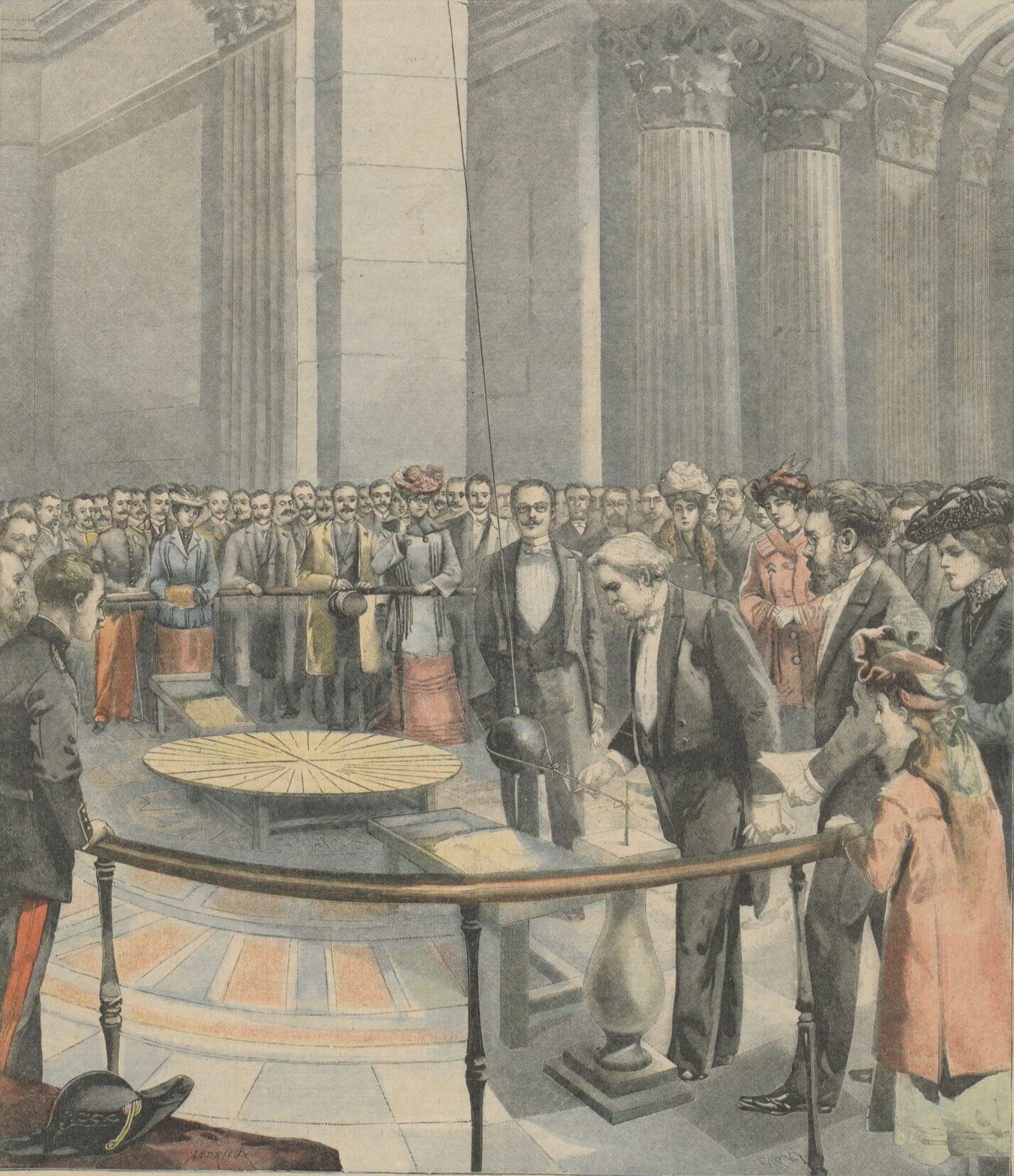
Foucault’s pendulum swinging again under the dome of the Panthéon, half a century laterLe Petit Parisien, Supplément littéraire illustré, November 2, 1902 · Gallica
You can watch the Earth turn. The French physicist Léon Foucault hangs a heavy ball from a long wire and sets it swinging. Nothing pushes the swing sideways, and yet over the hours it turns, slowly and steadily clockwise: about 11 degrees an hour in Paris, all the way around in about 32 hours. Only at the poles would it take a day; the farther from them, the slower it turns. It isn’t the pendulum that turns but the floor beneath it, carried around by the spinning Earth.
Foucault reports it to the Academy of Sciences on February 3. In March, he hangs a 28-kilogram ball from a 67-meter wire under the dome of the Panthéon, and crowds come to watch the Earth turn beneath it. The motion that Ptolemy and Tycho thought absurd is now something anyone can see.
Drag the slider to move through 32 hours. On the left, the Earth turns on its tilted axis. On the right, a pendulum at the North Pole, in Paris, and at the equator, seen from above. Its swing keeps its direction while the floor turns beneath it, in a day all the way around at the pole, three quarters of the way in Paris, and not at all at the equator. So to someone standing on the floor, the swing seems to turn the other way.
A long pendulum’s swing turns slowly clockwise, about 11 degrees an hour in Paris, though nothing pushes it sideways. The floor beneath it turns, with the spinning Earth. A motionless Earth can’t explain this.
The state of the discussion
Riccioli’s system now has two pending criticisms. Kepler’s Sun-centered system still has none, so it continues to be rationally adoptable.
Use arrow keys ←→, the Previous and Next buttons above, or the timeline below to move through the history.Swipe left or right, or use the Previous and Next buttons above or the timeline below, to move through the history.
Source: Foucault, “Démonstration physique du mouvement de rotation de la Terre au moyen du pendule”, Comptes rendus de l’Académie des sciences 32 (1851), 135–138
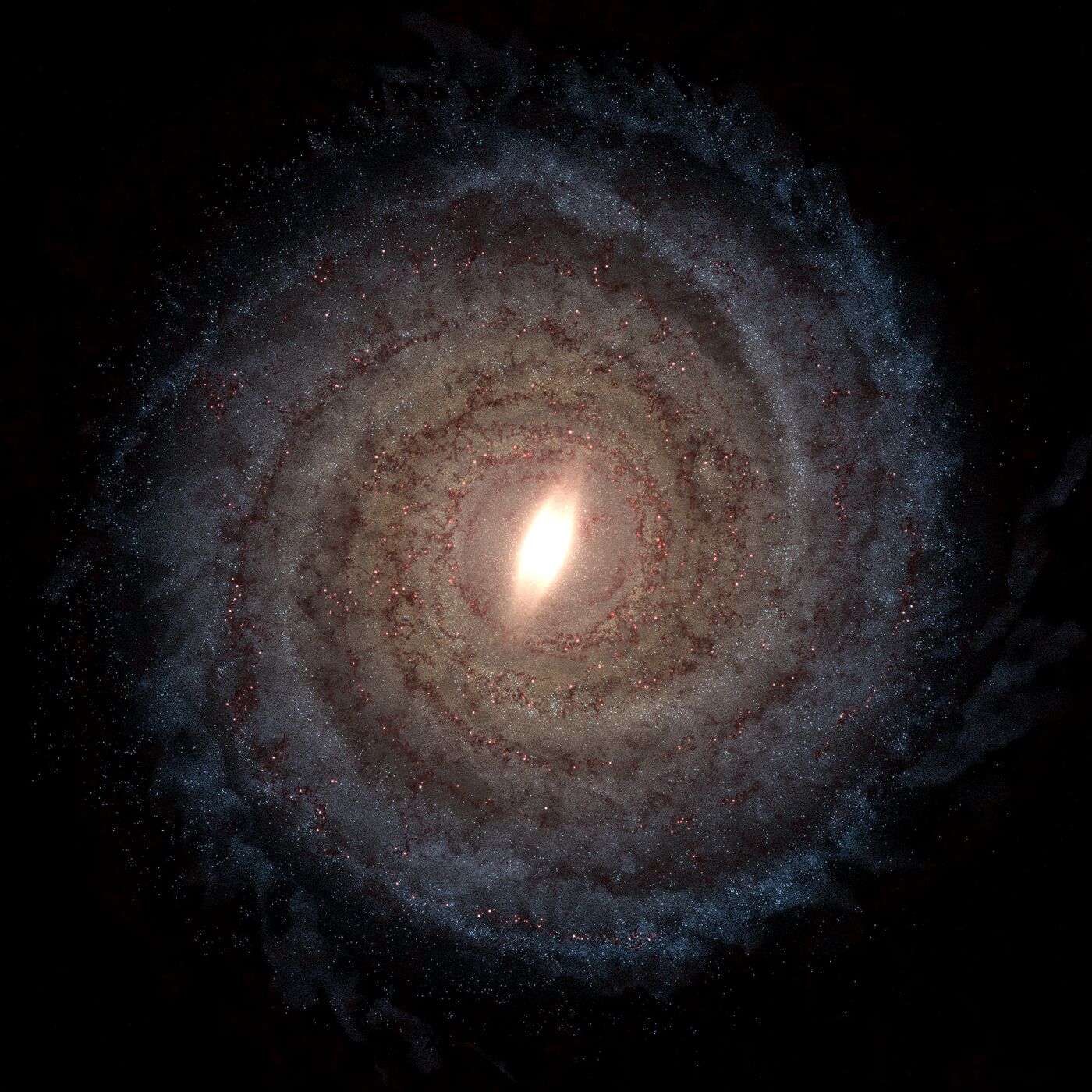
The Milky Way from above, as astronomers picture it today, with the Sun far out from the centerNASA’s Goddard Space Flight Center, Conceptual Image Lab
The Sun doesn’t stand still either. Since 1918, the American astronomer Harlow Shapley has argued that it lies far from the center of our galaxy, the Milky Way, a vast, flat disk of stars. In 1925, the Swedish astronomer Bertil Lindblad proposed that the whole disk turns. The Dutch astronomer Jan Oort tests it. If the galaxy turned like a solid wheel, the stars around us would keep their places. But if stars nearer the center go around faster, as planets nearer the Sun do, the stars ahead of us and behind us should drift in a telltale pattern. Analyzing the measured motions of hundreds of stars, Oort finds just that pattern. The Sun, carrying the Earth and the other planets along, circles the center of the Milky Way.
Drag the slider to move through time. On the left, the eight planets go around the Sun on their ellipses over twelve years, the nearer ones faster. On the right, the Milky Way from above: its stars go around its center, those nearer it faster, as Oort found, and the Sun goes once around, which takes about 230 million years.
Today, the Sun is known to lie about 27,000 light-years from the center, moving at about 230 kilometers a second and going around once every 230 million years or so. The planets follow their ellipses around it, nudged by each other’s pull, and in small ways, as Mercury’s orbit showed, that general relativity accounts for better than Newton’s law. Strictly, they circle the solar system’s center of mass, which, mostly because of Jupiter, wanders from near the Sun’s center to beyond its surface. And the Milky Way is one galaxy among billions. The German philosopher Immanuel Kant guessed as much in 1755: some of the faint, cloudy patches in the sky, called nebulae, might be other Milky Ways, far away. In the 1920s, the American astronomer Edwin Hubble showed that the Andromeda nebula is, in fact, another galaxy, far beyond our own.
So neither the Earth nor the Sun is the center of everything, and in Einstein’s theories, nothing is absolutely at rest. But measured against the faraway stars and galaxies, where the laws of motion are simplest, it’s the Earth that turns and goes around the Sun, as Foucault’s pendulum, the aberration of starlight, and parallax all show.
The planets go around the Sun, as Kepler said, but the Sun isn’t at rest either. Carrying them along, it circles the far-off center of the Milky Way, as the stars around us do, those nearer the center faster.
The state of the discussion
Oort revises Kepler’s Sun-centered system, and the Sun-centered system as known today, with the Sun itself in motion, has no pending criticisms, so it’s rationally adoptable. Riccioli’s system still has two.
Use arrow keys ←→, the Previous and Next buttons above, or the timeline below to move through the history.Swipe left or right, or use the Previous and Next buttons above or the timeline below, to move through the history.
Sources:
Kant, Allgemeine Naturgeschichte und Theorie des Himmels (Königsberg and Leipzig, 1755)
Lindblad, “Star-Streaming and the Structure of the Stellar System”, Arkiv för matematik, astronomi och fysik 19A, no. 21 (1925)
Oort, “Observational Evidence Confirming Lindblad’s Hypothesis of a Rotation of the Galactic System”, Bulletin of the Astronomical Institutes of the Netherlands 3 (1927), 275–282
Hubble, “Cepheids in Spiral Nebulae”, The Observatory 48 (1925), 139–142
Researched and written with the help of AI, from the sources named. AI can make mistakes. Veritula doesn’t claim perfect historical accuracy; the sources are there to check against.
The ground feels still, and anyone can see the Sun circle us. Overturning that took two thousand years. It revealed that we ride a planet that spins, circles the Sun, and sweeps around the Milky Way at 230 kilometers a second.
Discussions can branch out indefinitely. You may need to scroll sideways.
The planets go around the Sun, as Kepler said, but the Sun isn’t at rest either. Carrying them along, it circles the far-off center of the Milky Way, as the stars around us do, those nearer the center faster.
The Earth stands still at the center. The Moon, the Sun, Jupiter, and Saturn roughly circle it, and Mercury, Venus, and Mars go around the Sun on Kepler’s ellipses, so they fit Tycho’s measurements.
Gamma Draconis, and the other stars I’ve measured, shift back and forth over the year by about 20 seconds of arc, always toward the direction the Earth is moving in at the time. Light takes time to arrive, and the Earth’s motion slants the direction it seems to come from. A motionless Earth can’t produce this.
A long pendulum’s swing turns slowly clockwise, about 11 degrees an hour in Paris, though nothing pushes it sideways. The floor beneath it turns, with the spinning Earth. A motionless Earth can’t explain this.
Comment on #5808 by Galileo Galilei·#5810
Jupiter carries four moons around with it as it moves. So a moving Earth can keep its Moon, too.